
 Locate Us At : Bangalore, India
 Mail Us At : bhumananda@dummy.com
 Call Us At : +91 99999 99999
Family Problem Solution: Understanding Your Family as an Emotional System
Most family fights look like they are about money, habits, or daily arguments. But underneath those surface fights, there is almost always a deeper emotional structure that is out of balance. Family problem solution work begins with looking at the family as a whole system. When you understand how each person’s role connects to everyone else’s, the real source of conflict becomes much clearer. Swamy Ji Bhuma Nanda breaks down how that system works and where things tend to go wrong.
Every Family Has a Hidden Emotional Structure
Every family runs on an invisible set of rules and roles. These are not written down anywhere. They develop over the years through repeated behaviour and unspoken expectations.
Some families have one person who controls most decisions. Others have someone who keeps the peace at all costs. Some have a member who withdraws every time tension rises. These roles feel normal from the inside because everyone has been playing them for so long.
The problem starts when these roles stop serving the family and start creating friction. Solutions to family problems work by identifying which roles are causing strain and why.
Signs your family’s emotional structure is under stress:
- The same argument keeps happening with different triggers
- One person always ends up as the problem in every situation
- Tension builds quietly and then explodes over something small
- Some members feel unheard, no matter how much they speak up
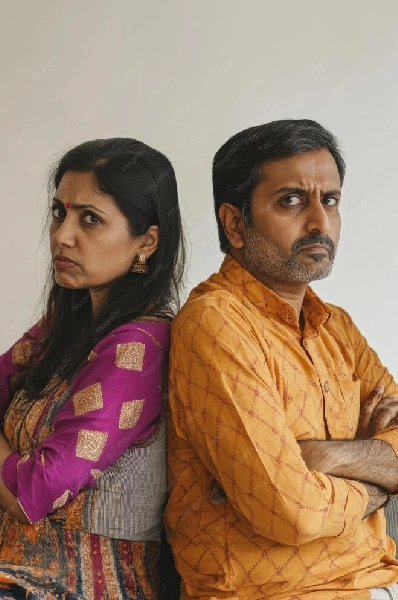
Family Problem Solution Through Role Identification
One of the most practical steps is identifying the roles each person plays, often without choosing them. Swamy Ji Bhuma Nanda looks at these roles carefully before suggesting any course of action.
The Controller Role
The controller dictates the rules and the way things are done in the house. They tend to think that they are holding things up. However, when this behaviour becomes “clinging”, open communication is cut off, and others feel they have no voice.
What this means:
- Fails to seek input from others and makes decisions without consulting others
- Angers or withdraws from any push back
- Others feel that they are walking on eggshells.
- The controller has too much work to do, and he feels unappreciated.
The Silent Resistor Role
The silent resistor doesn’t talk back. Rather, they withdraw, become silent or take some other more covert approach to challenging the family. This is often mistaken as being indifferent, but it is commonly a result of a lack of a safe way to express disagreement.
Signs of this role:
- One member is a “victim of the family”, that is, they do not participate in family discussions.
- Agreements made but “not implemented in silence.”
- The person withdraws instead of confronting when someone gets into an argument
- If they are not there, it is more tense than if they are.
Solve All Type of Life Problems
Negative Energy Removal, Horoscope Reading, Get Your Ex Love Back, Spiritual Healing Etc.

The Mediator Role
The mediator tries to keep the peace between everyone else. On the surface, this seems helpful, but when it becomes a permanent role, the mediator absorbs everyone else’s stress. They put their own needs last and burn out quietly over time. This is one of the most overlooked roles in solving family problems because the mediator rarely appears to be the one struggling.
How Imbalance Creates Conflict Patterns
When these roles become fixed and rigid, the family system stops being able to adapt. A controller who cannot loosen their grip, a resistor who never speaks up, and a mediator who never rests create a cycle that repeats itself no matter what the argument is actually about.
Swamy Ji Bhuma Nanda has worked with many families where the surface issue keeps changing, but the underlying dynamic stays the same.
Common signs of a stuck conflict pattern:
- Apologies are made, but the same fight returns within weeks
- New life changes make existing tension worse
- One member leaving or returning shifts the entire emotional tone of the home
- No one feels things are improving, despite everyone wanting change
Family problems solution through role awareness does not mean blaming anyone. It means seeing the system clearly so that real change becomes possible.
Restore Balance in Your Family System
Family conflicts that keep repeating are rarely about what they appear to be on the surface. If your home has been stuck in the same cycle, family problem solution guidance from Swamy Ji Bhuma Nanda can help you see what is really driving it. He works with families across the UK and Canada who are ready for things to genuinely change.